
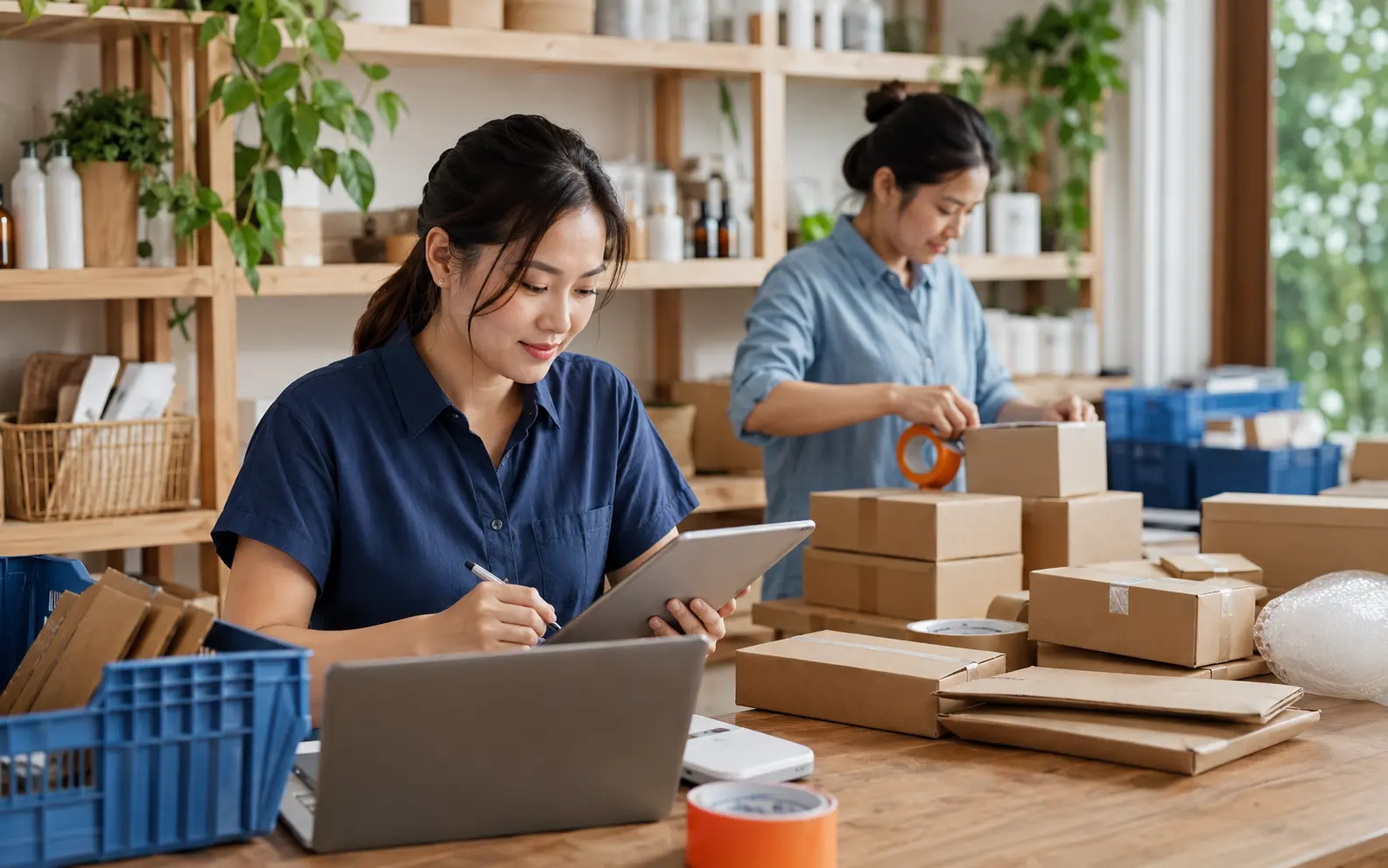
OEM allows influencers to launch products without building factories. KOLs bring audiences and trust; manufacturing partners provide formulations, ingredients, packaging and operating capability. The model may offer attractive margins, but outsourcing production does not outsource responsibility. When the seller also endorses the product, quality or advertising failures can damage both the product and a KOL's greatest asset: personal credibility.
How does OEM turn influence into a brand?
Under OEM, the brand owner does not directly own the factory. A contractor handles some or all stages from formulation, ingredient selection, production and packaging to documentation support. The client focuses on product selection, branding, distribution and customer care.
For KOLs or KOCs, a crucial link already exists: a community regularly following and trusting their perspective. Instead of buying reach from zero, they can introduce products through content, livestreams and platform stores. OEM thus reduces production investment and rapidly connects manufacturing capacity with demand creation.
A fast launch does not make business easy
Dân trí reports manufacturing offers allowing individuals to trial products with far less initial capital than building a factory, sometimes in weeks, with minimum quantities varying by product. This is a real OEM benefit: testing demand before committing to a large production structure.
Speed also creates a dangerous gap. A product may be ready before its owner understands ingredients, permitted-use limits, testing standards and advertising conditions. The business can sell without product-management capability. A successful campaign can amplify weaknesses faster than they can be corrected.
Profit rests on trust and distribution capability
Factories are generally paid for production capacity. Brand owners retain value from positioning, story, experience and reaching the right buyers. KOLs may possess the final two advantages: attention and trust. This can reduce early acquisition costs and support prices reflecting the brand rather than manufacturing cost alone.
That advantage is easily mistaken for guaranteed profit. Livestream revenue has not deducted platform fees, commissions, discounts, shipping, returns, stock, customer care, testing, compliance and incident costs. Track each order's contribution profit after all variable costs, not merely selling price minus purchase price.
Five risks can turn advantage into crisis
First is limited differentiation when many brands use the same common formulation. Second is inconsistent batches or ingredient changes without adequate oversight. Third is dependence on the factory for formulations, records and schedules, making switching difficult when problems arise.
Fourth is sales content. Closing pressure may push claims beyond evidence or permitted functions. Finally, reputation is concentrated: product and personal brands merge. A product incident can undermine trust in all content activity, brand partnerships and other products.
Outsourcing production does not outsource responsibility
The factory is responsible for work and standards established in the manufacturing relationship. The brand owner chooses the partner, approves the product, markets it and informs buyers. 'The factory supplied those documents' is not a substitute for the owner's verification process.
The 2023 consumer-protection law requires businesses to provide accurate, complete goods and services information. National Competition Commission guidance also states that influencers must disclose sponsorship and bear responsibility for accuracy. When KOLs own the brand, commercial interests require even clearer disclosure so buyers understand the endorsement.
Do not conflate OEM, ODM and private label
Marketing often uses OEM, ODM and private label broadly. The key is not the label but who develops the formulation, owns the design, pays testing costs, holds documentation and whether the brand can transfer the formulation to another factory.
Using an existing formulation with new packaging is usually faster but less differentiated. Investing in a proprietary formulation increases time, testing costs and management requirements while offering more durable product assets. Record ownership and usage limits in contracts rather than rely on verbal discussions or package names.
Seven control gates before a product goes live
First, verify factory legal standing, capability and production scope. Second, lock formulation, ingredient standards and allowable variation. Third, approve samples, test and retain batch samples. Fourth, complete product declarations, labeling and category-appropriate advertising conditions.
Fifth, establish approved content on benefits, usage, warnings and evidence. Sixth, run a trial batch with clear thresholds for returns, complaints and adverse reactions. Finally, prepare intake contacts, batch traceability, customer notices and recalls. Only when all seven gates work does KOL speed become an advantage rather than risk.
The key transition: from KOL to product owner
Content skills give KOLs a strong start but do not automatically confer goods-business management ability. Owners must reject insufficiently evidenced formulations, delay campaigns when documentation is incomplete and disclose quality problems. Such decisions may slow short-term revenue but protect the long-term brand.
A sustainable OEM model asks more than 'What will followers buy?' It asks: which problem does the product solve, what evidence permits the claim and which system protects customers when things go wrong? Answering these turns influence into genuine business capability.
- OEM accelerates market entry but does not replace product understanding and supplier control
- Followers can lower initial distribution costs, but high revenue does not necessarily create sustainable profit
- A brand-owning KOL must act as a product owner, accountable for information, quality and incident handling
OEM is not a shortcut around product capability. It redirects investment from factories to research, quality control, distribution and trust. Greater influence brings greater verification and transparency obligations: each endorsement sells a product and places personal credibility in the same transaction.
Suggested actions
Sources and updates
Independently edited and analyzed by Bài Học Kinh Doanh's editorial team on September 1, 2026 using Dân trí's report, the 2023 Law on Protection of Consumers' Rights, Decree 55/2024/NĐ-CP and National Competition Commission guidance. Capital levels, launch times and cost ratios in the source report are interviewee views and vary substantially by category, formulation, minimum order quantities and legal requirements. This article confirms no OEM model's profit level and does not replace legal advice or product testing.
Last updated: 1 Sept 2026
Bài Học Kinh Doanh Editorial Team
Editorial Team | Bài Học Kinh DoanhBan Biên tập Bài Học Kinh Doanh tổng hợp và biên tập các nội dung về kinh doanh, thị trường, quản trị, công nghệ và khởi nghiệp, với mục tiêu giúp người đọc hiểu rõ vấn đề, nhìn thấy bài học phía sau dữ kiện và có thêm cơ sở cho các quyết định thực tế.
View author profile

