TDB recorded 112 bankruptcies among businesses at least 100 years old in January–August 2026, putting the year on track to exceed the annual record. The data covers a defined category of bankruptcies, rather than showing that all longstanding businesses are disappearing. BHKD’s analysis examines financial resilience, succession capacity and governance in the effort to preserve traditional value.
1. What does the record actually describe?
According to TDB’s September 25 report, 112 businesses at least 100 years old went bankrupt in January–August 2026; this pace could exceed the record of 146 cases in 2024. The sample covers legal proceedings involving debts of at least ¥10 million. These are not full-year results, and they do not count every instance of a business ceasing operations.
In a separate report, TDB identified 46,708 businesses at least 100 years old at year-end 2025, using its database and verification of their operating status. A group of bankruptcies therefore cannot establish that all longstanding businesses are in decline. The number of businesses crossing an age threshold can rise even while others leave the market.
Three terms need to be distinguished. Bankruptcy under the statistical criteria is a financial and legal event. Voluntary closure may occur when an owner is unwilling or unable to continue. A change of ownership may preserve operations, skills and the brand. Describing all three as disappearance obscures differences in their causes and outcomes.
From BHKD’s perspective, the noteworthy signal is that capabilities which carried a business through generations may no longer be sufficient against a new combination of pressures. However, concluding that older businesses are more likely to fail than younger ones requires comparable data for the same period, sector, size and criteria. Absolute bankruptcy counts do not answer that question.
| Information | What can be said | What cannot yet be said |
|---|---|---|
| Cases over eight months | The pace of bankruptcies warrants attention | The full year has already set a record |
| Businesses at least 100 years old | Some longstanding businesses are struggling | Age itself causes failure |
| A bankruptcy event | There are issues requiring legal resolution | Every brand or skill immediately disappears |
2. Rising costs: a business can weaken even while sales continue
TDB’s July 2026 survey of businesses generally found that the proportion of cost increases passed through into selling prices was 39.9%, down from 42.1% in the previous survey. This is neither the increase in selling prices nor a figure specific to century-old businesses. It provides context on businesses’ ability to recover higher costs.
From a management perspective, a business may maintain sales while the money left after each order gradually shrinks. If customers will not accept new prices, the additional cost must be absorbed through productivity, changes to the product mix or reductions in activities that do not create value. Each option has limits; a prolonged squeeze can reduce the capacity for maintenance and investment.
A hypothetical example: a product sells for 100 currency units and has variable costs of 70, leaving 30 to contribute toward fixed costs. If variable costs rise to 80 while the price stays unchanged, the contribution falls to 20, a one-third reduction. Selling more may increase total contribution, but requires more capacity, inventory and working capital. This is an illustrative calculation, not data from any Japanese business.
A longstanding reputation may support price adjustments, but it does not provide unlimited pricing power. Customers also compare alternatives and consider affordability. A business needs to understand why customers accept its price: consistent quality, convenience, service or distinctiveness. A heritage story has economic value only when customers connect it to their actual experience.
Profitability also needs to be distinguished from the timing of cash receipts. An order with a good margin can still create pressure if the customer pays late while materials and wages must be paid upfront. Reviewing cash receipt and payment schedules alongside margins by product group helps SME owners spot weaknesses earlier than looking only at total revenue.
| Metric | Initially | After the cost increase |
|---|---|---|
| Selling price | 100 | 100 |
| Variable costs | 70 | 80 |
| Contribution in monetary terms | 30 | 20 |
| Contribution / selling price | 30% | 20% |
3. The gap is not someone to inherit the name, but a system that can continue
TDB’s 2025 survey of approximately 270,000 businesses found that 50.1% had no successor or had not identified one, a rate that had fallen for seven consecutive years. This figure covers businesses generally, not century-old companies specifically. The issue remains substantial, but the picture is not uniformly deteriorating.
Succession is often imagined as finding someone to take over the owner’s position. In management practice, much more must be passed on: craft skills, quality control methods, customer relationships, decision-making authority and an understanding of cash flow. Having someone named on paper does not necessarily equip them to do work that previously depended on the former owner’s experience.
Imagine a hypothetical workshop where only the owner knows when materials meet standards, recognizes customers likely to pay late, and knows how to adjust machinery to correct deviations. Unless that knowledge becomes practiced capability with someone ready to receive it, the business can lose its competence even before ownership changes. Documentation is only part of the answer; a successor needs real work assignments and feedback.
Alongside capability is the motivation to take over. The next generation may value the legacy without wanting to inherit a model that demands excessive time, offers unstable income or gives them no authority to change it. That does not, by itself, demonstrate irresponsibility. The proposed opportunity needs to be assessed for viability and a clearly defined role.
The solution should therefore go beyond asking children and grandchildren to continue. A business can prepare an internal manager, explore outside partnerships or adjust its model before handover. Arrangements involving ownership, obligations and management authority require specific verification by the parties; no single structure suits every business.
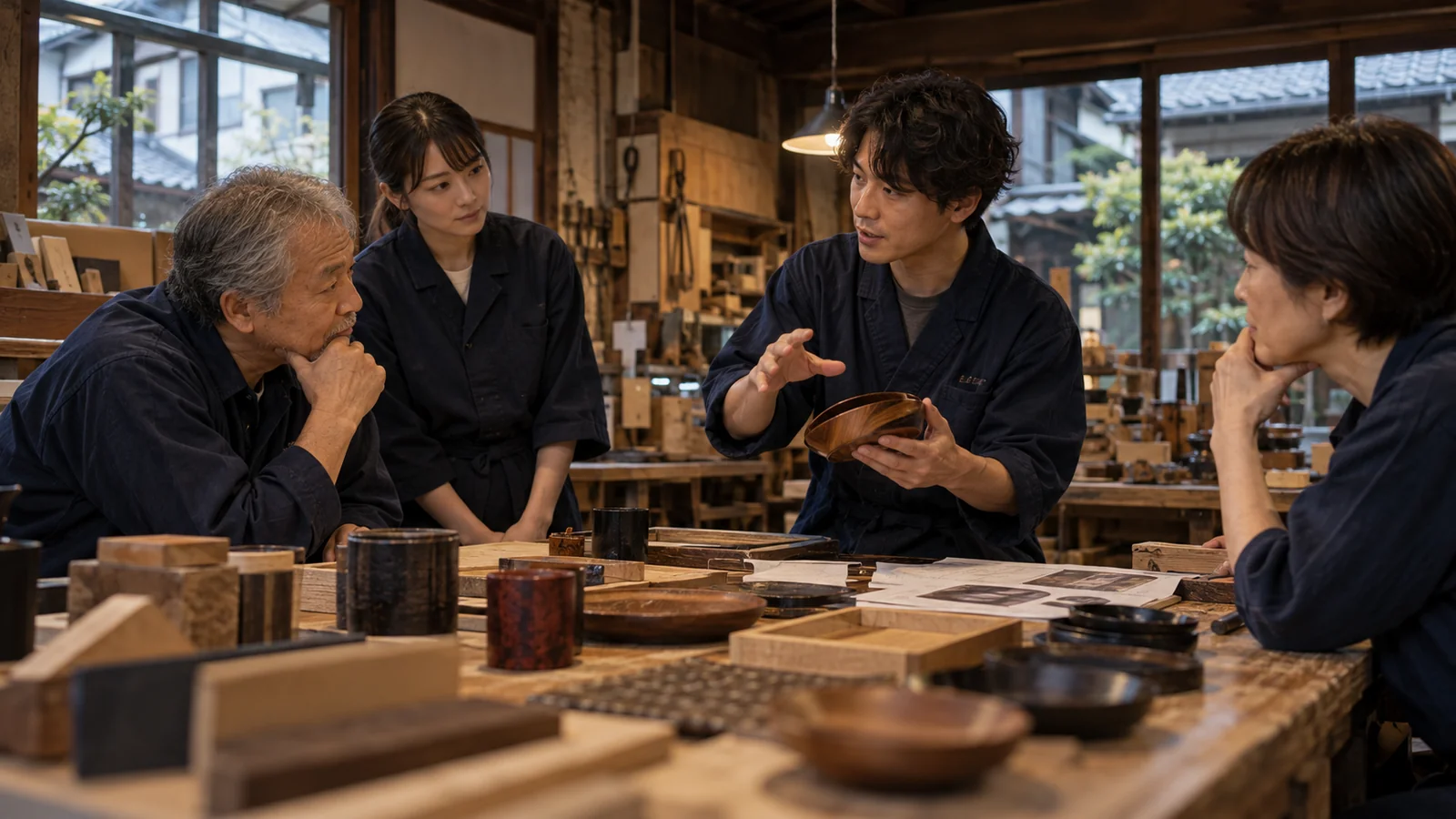
The lesson is also directly relevant to young founders: succession begins with work being done in your absence. If every sales shift, production order or customer decision requires the owner’s intervention, select one task to delegate early. Checked and tested handovers gradually build continuity rather than waiting until departure becomes unavoidable.
Read nextPreserving craft capabilities and knowledge when the team changes
4. Tradition is an advantage when customers still understand its value
In BHKD’s analysis, longevity can provide assets that are difficult to build quickly: accumulated trust, specialized skills and customers’ memories. Those assets do not automatically become orders from a new generation. Someone who bought out of attachment to a neighborhood may understand the product differently from someone discovering it online for the first time.
A business should separate what needs preserving from the way it currently serves customers. Craft quality can remain while sizes, usage instructions, ordering methods or distribution channels change. Other changes can damage core capabilities: cutting ingredients until a product no longer delivers its promise, or expanding so rapidly that quality cannot be controlled.
A hypothetical scenario: a traditional gift maker has loyal existing customers but struggles to reach younger buyers. Posting more videos is insufficient if products come only in large sets and newcomers do not know when to use them. A small trial pack, usage information and a clear purchase process may be a more sensible experiment. Repeat purchases should be measured, not just views.
Adaptation does not mean every establishment must become a chain, export or chase AI. In a narrow market with sufficient profitability, maintaining an appropriate scale may be a good decision. Innovation should address an identified bottleneck: reducing errors, saving time, reaching customers with a need or making the value easier to understand.
To avoid drawing unsupported conclusions from statistics, this article does not present these hypothetical scenarios as proven causes of individual bankruptcies. They are management questions for owners to examine their own models. Aggregate data does not reveal what a particular shop changed, how it experimented or how customers responded.
Read nextChoosing the right niche instead of expanding at any cost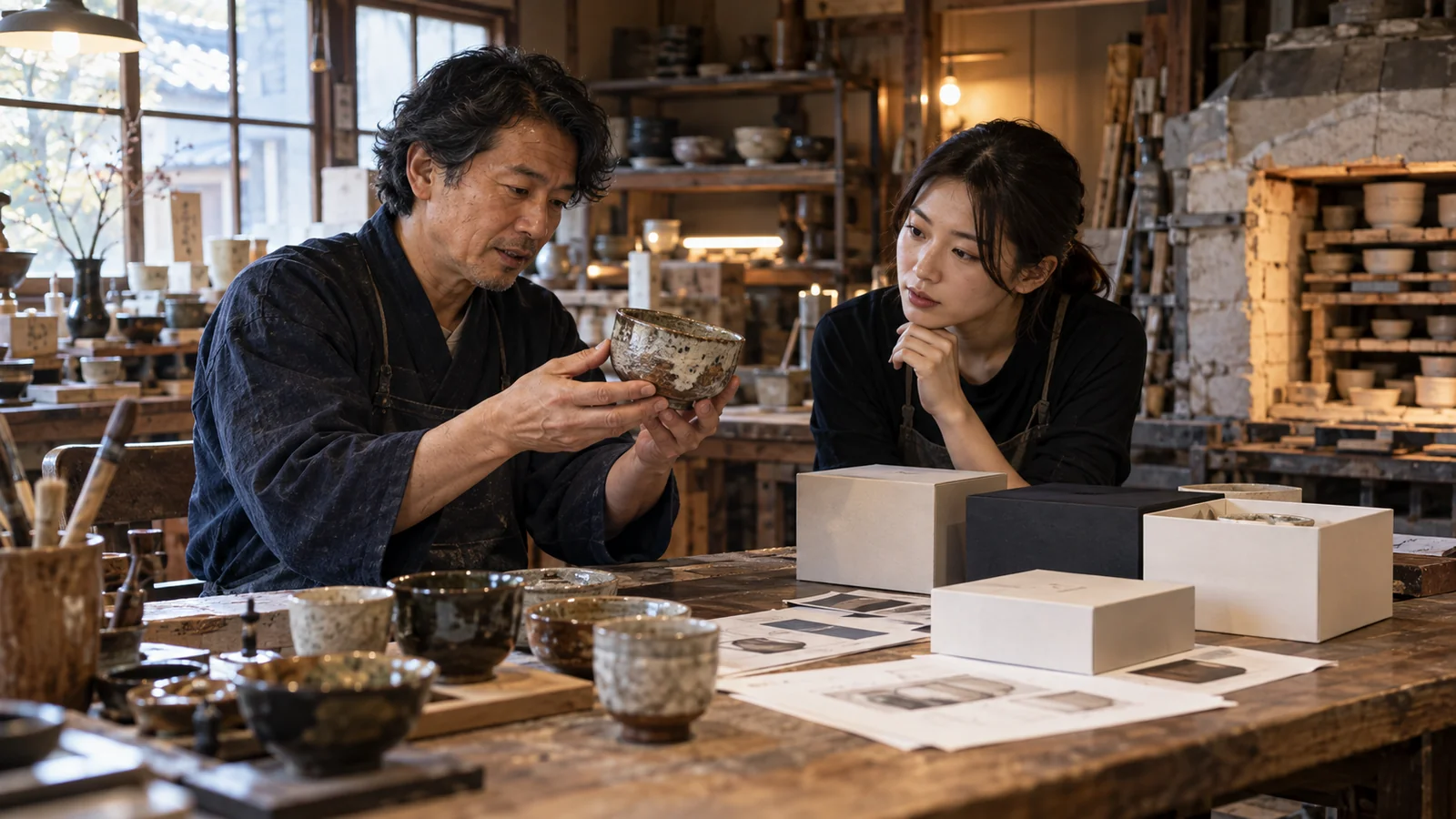
5. Reputation cannot replace controls
TDB recorded that three of the four bankruptcy cases with debts of at least ¥1 billion in the surveyed group involved governance or accounting violations. This small subset is insufficient to infer that fraud is widespread among longstanding businesses.
The relevant lesson from BHKD’s perspective is that trust can delay difficult questions. Even when people are accustomed to trusting an owner or a long business history, receivables and payables must still be confirmed, inventory counted and obligations reconciled. Respect for experience does not mean abandoning verification.
Pressure from the external environment should be distinguished from internal information failing to reflect reality. Rising costs can weaken a model even under transparent management. But if managers misunderstand inventory, receivables or payment obligations, they also lose the ability to make timely decisions. These two risks can intersect without being the same.
For a small establishment, controls do not necessarily require a cumbersome organization. They can begin with reconciling actual figures against records, separating transaction preparation from approval for important dealings, identifying accountable people and defining how discrepancies are reported. Control levels should increase with transaction type and risk exposure.
One sign worth examining is consistently attractive reports while actual cash receipts lag, inventory moves slowly or explanations for discrepancies keep recurring. This is not evidence of fraud. It is a reason to ask further questions, check supporting records and seek appropriate assistance before making additional commitments.
Read nextReport discrepancies early while managers still have options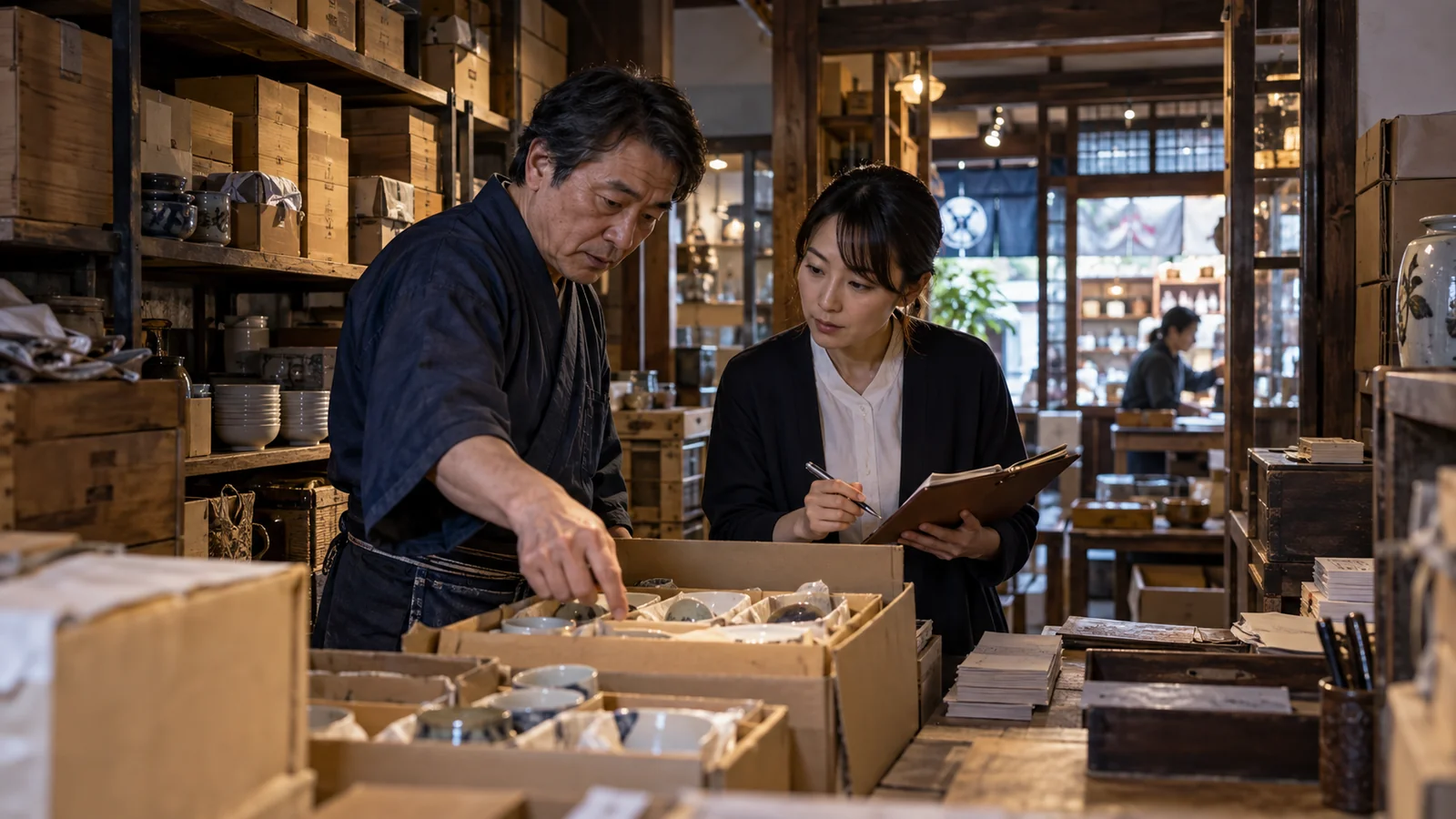
6. New ownership, downsizing or closure: consider the value that remains
When a business cannot continue under its existing structure, the question is not simply how to keep the legal entity alive at any cost. From BHKD’s perspective, it is necessary to identify what still creates value: skills, customers, the brand, equipment, the location or the team. Each component may have a different future depending on demand and actual conditions.
A new partner may bring sales or operational capabilities. But a change of ownership does not automatically repair a model without demand or cash-generating ability. The incoming owner needs to understand why customers choose the business, the cost of maintaining quality and dependence on the departing person. Buying a name while overlooking operations can leave the expected advantage nonexistent.
Downsizing can also protect what matters. A hypothetical establishment might discontinue weak product groups to focus on those with good margins and sufficient skilled staff. This requires checking the effects on customers, employees and existing commitments. A smaller scale does not mean failure if the remaining operation is genuinely sustainable.
Conversely, an orderly closure may sometimes need consideration when continuing only increases obligations and no viable alternative exists. This is not legal advice for a specific case; obligations to employees, customers, creditors and relevant authorities must be assessed against the records and applicable rules.
Keeping a business alive by postponing every difficult question can steadily narrow its options. Considering a model change, a new partner or a handover early provides more time for verification. The value of preparation lies in the number of options still available, rather than a promise that the business will necessarily survive forever.
7. Lessons for business owners: prepare for the next stage of longevity
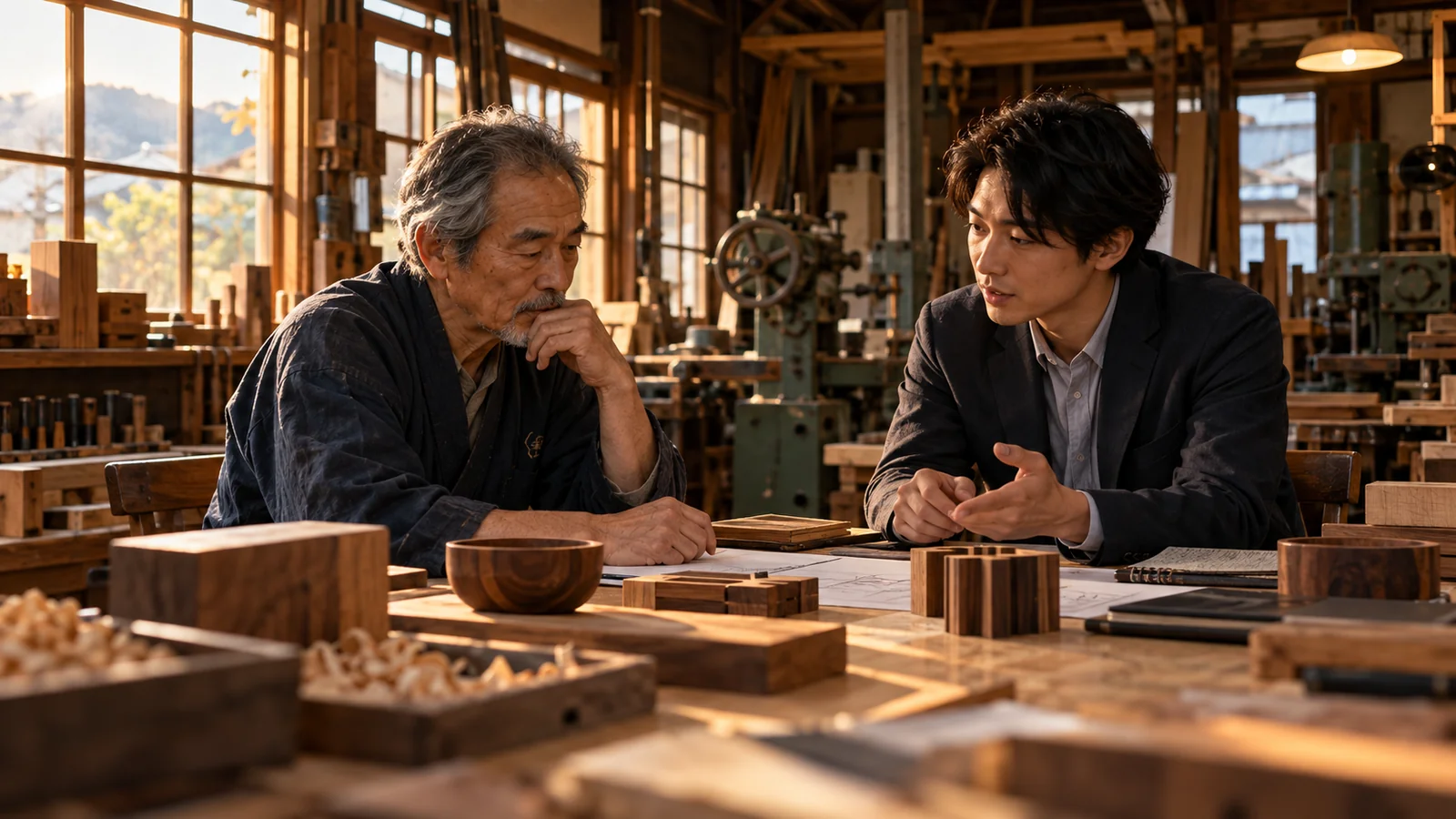
Japan’s experience should not be read as a formula that traditional businesses will inevitably fail, or that digitization alone guarantees survival. Market demand, craft capabilities, finances and owners’ choices create very different circumstances. What can be learned is how to assess the ability to continue before pressure forces a decision.
BHKD suggests selecting one question from the table below and reviewing it using evidence. If the problem is that the owner always has to be present, try delegating a task. If profit per order is declining, review costs and pricing structure. If new customers are lacking, verify demand before increasing promotional spending.
Signals must be interpreted together. A month of low sales may be seasonal; a late receivable may have an explanation; a difficult handover may require training time. Avoid turning a checklist into an automatic diagnosis. The aim is to identify issues that warrant deeper questions and decide what can be checked next.
For a 30-day trial plan, use the first week to gather evidence and select one bottleneck; the second to agree on a change with those doing the work; the third to implement it on a small scale; and the final week to review results and side effects. This is BHKD’s suggested schedule, not a method proven effective for every business.
A longstanding business needs both perseverance and the ability to change. Maintaining quality is one thing; keeping every method unchanged is a separate choice. Its future depends not only on the years already lived, but on understanding current customers, seeing the numbers accurately and enabling the next generation to do the work.
| Question | Evidence to examine | A small verification step |
|---|---|---|
| What are customers paying for? | Feedback and reasons for repeat purchases | Ask both new and existing customers |
| How much does each order still contribute? | Selling price, variable costs and order mix | Recalculate one product group |
| Can the work continue when the owner is away? | How often instructions or approval are required | Hand over one deliverable with defined standards |
| Does the information match reality? | Cash received, receivables and payables, inventory and obligations | Reconcile one transaction flow |
| Who can take over, and under what conditions? | Capability, motivation, authority and resources | Discuss a role and test it through real work |
- Eight-month figures are not full-year results; bankruptcy differs from voluntary closure or a change of ownership.
- Reputation can generate demand, but it cannot replace the ability to pay obligations and organize operations.
- Business continuity requires people, capabilities and a model worth carrying forward.
A business may survive for a long time by continually adjusting how it creates value. Quality, trust and core capabilities should be preserved; pricing mechanisms, decision-making authority, knowledge retention and the customer service model should be reassessed.
Suggested actions
Frequently asked questions
Has Japan already set a full-year 2026 record for bankruptcies among century-old businesses?
The report used in this article covers only the first eight months and describes a pace on track for a record. It should not be called a full-year result.
Are bankruptcy, closure and a change of ownership the same?
No. They differ in the event, causes and potential to maintain operations. A change of ownership can allow a brand or skills to continue; it does not automatically mean disappearance.
Is the absence of a successor the cause in every case?
That conclusion cannot be drawn from aggregate data. The article separates succession from profitability, adaptation and controls; each case requires its own records.
Where should small business owners begin?
Choose an evidence-backed bottleneck: margin per order, cash schedules, dependence on the owner or missing information. Test a small change and review it before expanding.
Sources and updates
Cross-checked on October 7, 2026 against four original Teikoku Databank reports. January–August 2026 bankruptcy statistics, the business population at year-end 2025, the 2025 succession survey and the July 2026 cost pass-through survey cover different scopes; they should not be used to infer the causes of individual businesses’ failures. The discussion of mechanisms, checklist and hypothetical scenarios are BHKD’s original analysis. AI illustrations are labeled separately.

Bài Học Kinh Doanh Editorial Team
Editorial Team | Bài Học Kinh DoanhBan Biên tập Bài Học Kinh Doanh tổng hợp và biên tập các nội dung về kinh doanh, thị trường, quản trị, công nghệ và khởi nghiệp, với mục tiêu giúp người đọc hiểu rõ vấn đề, nhìn thấy bài học phía sau dữ kiện và có thêm cơ sở cho các quyết định thực tế.
View author profile