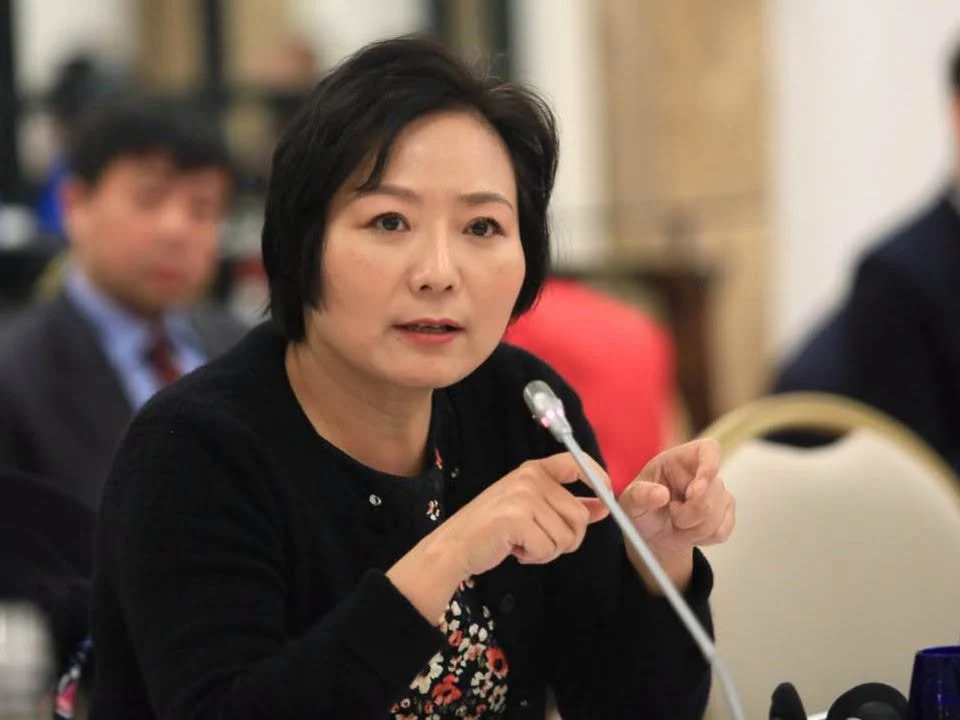
After working as a technician and then a reporter, Ngô Á Quân (Wu Yajun) entered real estate following difficulties buying her first apartment. Building Longfor put her among China’s prominent female billionaires. But in 2012, divorce and the division of ownership changed her wealth ranking. Behind the story are two business challenges: understanding customers and managing ownership.
From technical work to observing the housing market
Ngô Á Quân was born in 1964 in Chongqing, China. According to biographical information cited by China Daily, she graduated from Northwestern Polytechnical University in 1984 and worked as a reporter and editor from 1988 to 1993. VietNamNet notes that she previously held a technical role at a state-owned factory.
Reporting on real estate exposed her to the industry from several perspectives. This is a noteworthy foundation: observing a market before becoming a direct participant. Professional experience is nevertheless only part of the story; building a business also requires capital, a team and execution capability.
Buying her first apartment and finding opportunity in an underserved need
According to VietNamNet’s January 23, 2024 profile, difficulties buying her first apartment helped her identify a business opportunity. She entered property development in the 1990s with her then-husband, Cai Kui. Longfor’s official website dates its predecessor’s establishment in Chongqing to 1993.
The thought-provoking point is the shift from buyer to product developer. A customer does not simply need ownership of a home on paper. They need a convenient place to live, delivery as promised and suitable services after handover.
From BHKD’s perspective, inconvenience may signal a market gap. One person’s experience is not enough to establish market-wide demand, however. Founders need to check whether the problem is widespread, whether customers are willing to pay to solve it and whether the business can provide a solution at a reasonable cost.
Read nextFrom a buyer’s complaint to a new product range: lessons from Dh FoodsFrom a product opportunity to a diversified business
Longfor listed on the Hong Kong stock exchange in 2009, according to the group. Its publicly available profile describes property development, commercial investment, asset management, property management services and smart construction among its business areas.
This represents a change in the management challenge. When a business is small, founders may directly check many tasks. As its scope expands, quality must be maintained through processes, delegated authority, personnel and measurement mechanisms.
For a property business, understanding buyers must go alongside project execution and cash-flow management. A good product can generate interest, but collection schedules, construction costs and financial obligations still determine whether commitments can be sustained. This is an analytical observation, not a conclusion about Longfor’s current financial condition.
Read nextCash flow and profit: three questions business owners should check2012: why did divorce change her position in the rankings?
SCMP reported on November 21, 2012 that she no longer held the title of China’s richest woman after her divorce. The report recorded their previously combined ownership as 75.6%, with approximately 45.4% remaining attributable to her after division. The wealth estimate cited at the time fell from US$7.3 billion to US$4.2 billion; Yang Huiyan took the top position under the wealth index used.
These figures describe the historical context in 2012. They are not cash balances, current wealth in 2026 or an equivalent business loss. Share values and the way assets are attributed to individuals can change rankings even while the business continues operating.
In a contemporaneous report, China Daily quoted Longfor’s response that the divorce had been completed peacefully and amicably, and that the share division did not breach debt covenants. This should be understood as information the company provided then, rather than a guarantee against all subsequent risks.
Three separate issues: personal wealth, control and business operations
Personal wealth is often estimated from shareholdings and related assets. It can fluctuate with market prices, ownership percentages and the calculation method used by each ranking.
Control involves voting rights, agreements between shareholders and governance structures. A single ownership percentage does not fully explain who can decide important matters.
Business operations must be assessed through products, customers, the team, cash flow and the ability to fulfill obligations. Losing a ranking title does not automatically establish business failure; conversely, a high wealth ranking does not replace assessing business health.
For founders who invest with relatives or a spouse, the practical lesson is to clarify rights and responsibilities early. Decision-making, transfers, capital withdrawal and disagreement resolution should be designed for the applicable law and circumstances, rather than relying solely on trust during favorable times.
Bài Học Kinh Doanh’s perspective: opportunity begins with observation; sustainability comes from systems
Telling the story only through the endpoints of “richest” and “losing the crown” can obscure the more important part: how a person builds industry understanding, identifies a customer problem and organizes resources to solve it.
A useful founder exercise is to select a recurring customer complaint and answer three questions: where does the problem occur, what is missing from current solutions, and would the improvement create value customers will pay for? Then test on a small scale and monitor both satisfaction and economic performance.
Alongside finding opportunities, a business needs an operating plan for the founder’s absence or changes in relationships among co-owners. A sustainable model must preserve service quality even when the leader’s circumstances change.
A question for anyone building a business: are you solving a problem customers actually face, and is your system clear enough to keep serving them through change?
Read nextHow can a business become less dependent on its owner?- Longfor states that its predecessor was established in Chongqing in 1993 and listed in Hong Kong in 2009.
- Her loss of the title of China’s richest woman was reported in 2012; it is not a new development in 2026.
- Personal wealth rankings, control and business health are three distinct issues.
A customer inconvenience can reveal a product opportunity. To develop that opportunity sustainably, founders also need operating systems and an ownership structure able to withstand change.
Suggested actions
Frequently asked questions
Who is Ngô Á Quân?
Ngô Á Quân, internationally known as Wu Yajun, is a Chinese entrepreneur and co-founder of Longfor who worked as a technician and reporter before entering real estate.
When did she lose the richest-woman title after divorce?
Reports recorded her loss of the title of China’s richest woman in 2012. This is a historical milestone, not current ranking information.
Sources and updates
Edited on October 6, 2026 using Longfor’s profile and the historical reports linked below. The divorce and wealth-ranking milestones date to 2012; the article does not present them as current wealth figures. Analysis and practical questions reflect BHKD’s perspective.
Last updated: 6 Oct 2026
Bài Học Kinh Doanh Editorial Team
Editorial Team | Bài Học Kinh DoanhBan Biên tập Bài Học Kinh Doanh tổng hợp và biên tập các nội dung về kinh doanh, thị trường, quản trị, công nghệ và khởi nghiệp, với mục tiêu giúp người đọc hiểu rõ vấn đề, nhìn thấy bài học phía sau dữ kiện và có thêm cơ sở cho các quyết định thực tế.
View author profile