In the first six months of 2026, combined sales on Shopee, TikTok Shop, Lazada and Tiki reached VND 291.6 trillion, up 44.11% year on year. Unit volume rose only 13.67%, and shops receiving orders increased 14.11%. Spending also concentrated strongly in official stores. For sellers, the message is not that joining a marketplace automatically brings more sales. The market rewards higher order values, clearer trust signals, better operations and the ability to retain profit after every cost.
How large is VND 291.6 trillion really?
According to Metric, combined Shopee, TikTok Shop, Lazada and Tiki sales in the first half of 2026 reached VND 291.6 trillion, up 44.11% from the same period in 2025. During that period, 2,186.7 million products were sold, up 13.67%, and 613,800 shops received orders, up 14.11%.
Spread across the first half of 2026's 181 days, this is approximately VND 1.611 trillion in sales and over 12 million products daily. This average illustrates scale; it does not imply evenly distributed demand across days, categories or marketplaces.
Read the three growth rates together. Sales rose 44.11%, far faster than unit volume or shop numbers. The market is not merely selling more items. Monetary value per product is also higher, while revenue tends to concentrate among more efficient operators.
What does sales growth outpacing unit volume indicate?
Dividing total sales by units gives an average sales value of approximately VND 133,000 per product during the period. Comparing sales and volume growth indicates this average rose about 26.8% year on year.
Use caution: this is not average order value, since an order can contain several products. The measure can also change because prices rise, category mix shifts, buyers select higher-value products or recording methods change.
The gap nevertheless suggests an important movement. The game no longer revolves only around very cheap products and huge order counts. Consumers are willing to spend on higher-value options when they perceive provenance, quality, experience and reliability.
2.79% of Shop Mall stores generate 34.2% of sales: spending is choosing trust
Across Shopee, Lazada and TikTok Shop, Shop Mall stores account for only 2.79% of all stores but contribute 34.2% of sales. Year on year, their numbers fell 6% while group sales increased 54%. Average sales per Mall store therefore rose approximately 63.8%.
This signals concentration. More sellers continue entering the market, but value growth is not evenly distributed. Brands and official stores have advantages in provenance, recognition, advertising budgets, major campaign participation, content, livestreaming and order processing.
Small sellers do not necessarily need Mall status to have opportunities. But they must replace the badge with other trust evidence: clear information, real images, quality reviews, consistent promises, quick responses, after-sales policies and a sufficiently distinctive assortment.
A larger market does not make sellers' lives easier automatically
Total market sales represent transaction value. They do not show what sellers retain after product costs, platform fees, advertising, vouchers, affiliate commissions, shipping subsidies, packaging, returns and operational staffing.
A shop can grow GMV while profit falls if traffic becomes more expensive, promotions dominate or low-margin products are pushed. Conversely, moderate sales growth with fewer returns, more repeat purchases and better SKU mix can produce stronger cash flow.
VND 291.6 trillion proves only that the pie is growing. It does not prove each seller's share is growing, let alone profitable. Sellers must move from measuring how much they sell to how much they earn and what they sacrifice to obtain those sales.
Large categories create opportunities—and stronger competition
According to data cited by ITPC, beauty leads sales at approximately VND 49,507.75 billion, followed by women's fashion at VND 40,351.10 billion and home and living at VND 37,679.18 billion.
Large scale indicates strong demand but attracts brands, sellers, advertising budgets and creators. Having a product is not sufficient advantage. Sellers must solve assortment selection, launch speed, content quality, reviews, inventory and returns.
A growing category does not necessarily suit every seller. Real opportunity lies where sufficient demand intersects with distinctive supply capability, margins able to absorb marketplace costs and trust-building capabilities competitors cannot easily copy.
With Shopee and TikTok Shop dominating, channel strategies need greater clarity
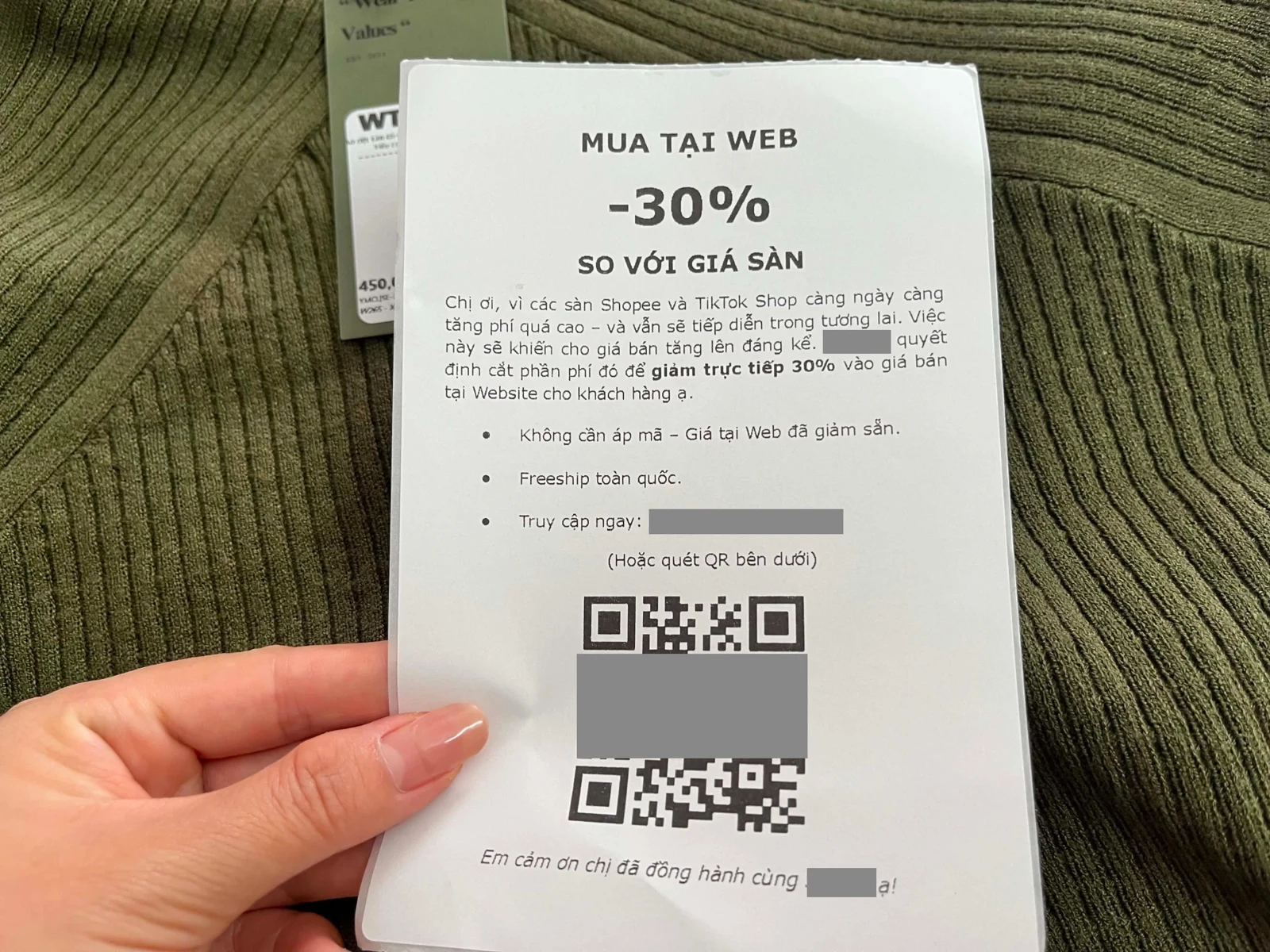
Metric figures cited by Tiền Phong indicate Shopee and TikTok Shop contributed around 96% of the four marketplaces' sales in the period. This concentration makes the platforms difficult to ignore for most sellers, while complete dependence increases risk.
Shopee is often strong in search, comparison and established demand. TikTok Shop is strong in discovery, content, creators and activating demand. A product may need two approaches rather than identical images, prices and scripts copied between platforms.
Define each channel's role in the customer journey, then track costs and customer quality by source. Also build suitable owned assets, such as consent-based customer data, communities, websites or care channels, so algorithm or policy changes do not eliminate all customer access.
What does this mean for sellers? Five important changes
First, trust becomes a form of capital. Sellers with brands, clear provenance and consistent experiences can capture a larger share of a market increasingly focused on quality.
Second, low prices are no longer a sufficient strategy. Price still matters, but must accompany perceived value, quality evidence and a clear purchasing reason.
Third, content becomes part of the sales system. Videos, livestreams, product pages and reviews must answer customer questions, not merely generate views.
Fourth, operations determine profit retention. Inventory, packaging, delivery, responses and returns directly affect rankings, costs and repeat-purchase potential.
Fifth, manage by SKU and revenue source. Total GMV can conceal loss-making products, campaigns and customer groups with no long-term value.
The formula sellers need is no longer revenue minus product costs
A more practical view calculates contribution profit per order as net revenue minus product costs, marketplace fees, allocated advertising, affiliate commissions, shop-funded vouchers, shipping subsidies, packaging, expected return costs and variable processing costs.
Every shop should review at least five SKU-level measures: sales, contribution profit, order-acquisition cost, return or cancellation rate and repeat-purchase rate. Looking only at sales can make the best-selling product the one draining the most cash.
Analyze weekly or by campaign rather than waiting until quarter-end. With rapidly changing fees, algorithms and purchasing behavior, a previously profitable SKU may become inefficient within weeks if advertising or return costs rise.
Where do small shops still have opportunities?
Small shops struggle to win on reach, budgets and price everywhere. They can win in a clear niche where product knowledge, response speed, personalization and community relationships create trust.
Instead of adding hundreds of SKUs, a shop can build a core assortment, create detailed guidance, gather quality reviews and develop complementary products. Aim to improve conversion, basket value and repeat buying before spending more on traffic.
Opportunities also lie in needs large brands serve poorly: local markets, specific customer groups, products needing advice, after-sales support or specialist content. Small scale becomes an advantage when it enables faster understanding and adjustment.
A 30-day plan to turn market data into action
Week one: export the latest 90 days of data and calculate contribution profit by SKU. Stop evaluating effectiveness solely by GMV, order numbers or platform-reported advertising revenue.
Week two: divide the assortment into four groups—profitable growth, unprofitable growth, small but promising, and candidates for removal. Choose at most 20% of SKUs for focused content, inventory and budget.
Week three: review all store trust evidence—provenance, descriptions, real images, instructions, policies, reviews and answers to common objections. Do not add advertising until product pages can convert adequately.
Week four: design a controlled experiment around basket value, cross-selling, creator content or post-sale care. Set profit thresholds and stopping conditions before launch to avoid sales growth at any cost.
- Sales growth outpaced unit volume, suggesting rising average sales value per product; do not confuse this measure with order value
- Shop Mall stores are a tiny share of store numbers but generate over one-third of sales on the three measured platforms, reflecting concentration in trusted, operationally capable sellers
- Sellers need to move from chasing GMV to managing contribution profit, returns, advertising costs, platform costs and customer value
VND 291.6 trillion demonstrates growing online demand, not a promise that every store will make money more easily. As markets mature, advantage shifts from opening quickly and selling cheaply to building trust, controlling unit economics, choosing the right categories and creating repeatable operations. Ask how much profit each order retains, rather than only how much this month's GMV grew.
Suggested actions
Sources and updates
Original analysis by the Bài Học Kinh Doanh editorial team, updated September 2, 2026 using Metric's Vietnam Ecommerce Report for the first half of 2026 and cross-checking sources. Reported sales are total recorded sales value on four measured platforms, not sellers' net revenue or actual received profit. Averages explain trends; they do not represent every order or store.

Bài Học Kinh Doanh Editorial Team
Editorial Team | Bài Học Kinh DoanhBan Biên tập Bài Học Kinh Doanh tổng hợp và biên tập các nội dung về kinh doanh, thị trường, quản trị, công nghệ và khởi nghiệp, với mục tiêu giúp người đọc hiểu rõ vấn đề, nhìn thấy bài học phía sau dữ kiện và có thêm cơ sở cho các quyết định thực tế.
View author profile